
5 Interior Layout Mistakes You Don’t Know You’re Making (And How to Fix Them)
Interior layout planning plays a crucial role in creating spaces that are not only beautiful, but also functional and comfortable. Even when you choose stylish furniture, textures, and colours, poor spatial planning can diminish the impact of your design. Whether you’re renovating your home or starting from scratch, avoiding common interior layout mistakes can save time, money, and frustration. Below are five interior layout mistakes you might not know you’re making and how to fix them like a pro.
12/16/20253 min read
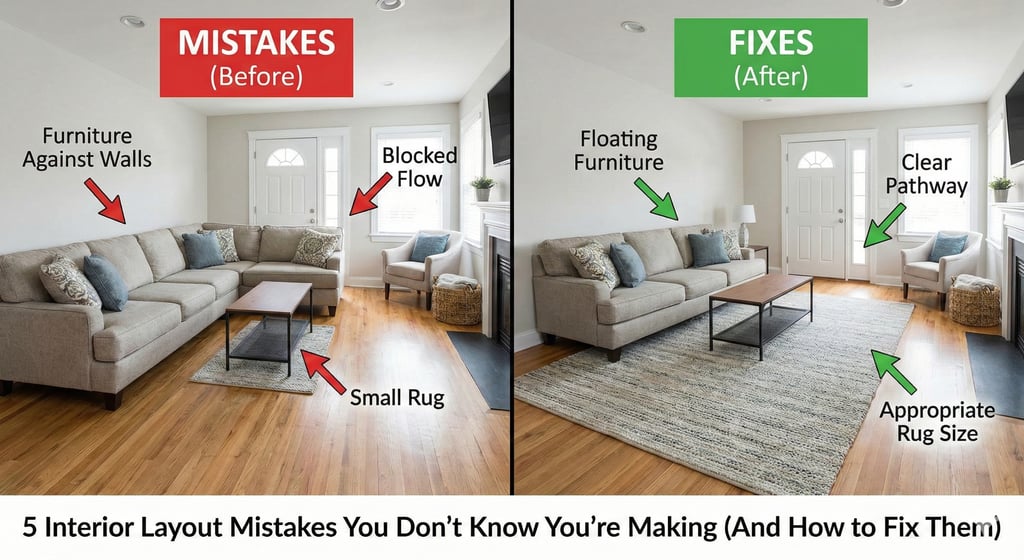
1. Ignoring Functional Flow and Movement
One of the most overlooked layout mistakes is ignoring how people move through a space. Furniture that blocks natural pathways or is placed too close together can make even a spacious room feel cramped.
When planning a layout, consider circulation routes first. A functional layout should allow you to walk from one area to another without bumping into furniture or squeezing through tight gaps. Avoid placing large pieces — like sofas or cabinets — in high-traffic areas unless they are positioned strategically. Moreover, furniture should complement the room’s scale and not block doors, windows, or pathways.
Fix: Start with a clear floor plan. Ensure that at least 3 feet of circulation space is maintained around seating, hallways, and key functional zones. This promotes smooth movement and enhances the perceived size of the room. (The Times of India)
2. Pushing Everything Against the Walls
Many homeowners instinctively push furniture against walls thinking it will make the room look bigger. In reality, this layout mistake results in flat, uninspired spaces that lack intimacy and structure.
Floating furniture — especially seating — can actually open up spaces and create conversation zones. Arranging sofas and chairs away from the walls encourages better interaction and defines functional areas within open floor plans.
Fix: Try “floating” your seating group in the centre of the room when possible, anchored by a well-sized rug and a coffee table. Not only does this improve visual flow, but it also enhances comfort and usability. (Archizy)
3. Misjudging Scale and Proportion
Furniture that is too big or too small for a space can throw off balance and harmony. A bulky sofa in a tiny living room can overwhelm the space, while a tiny rug under large furniture can make the room feel disjointed and unfinished.
Scale and proportion are essential elements of interior layout planning that ensure every piece fits cohesively in the room. When items are disproportionate, the design may feel chaotic or uncomfortable, regardless of how beautiful individual pieces might be.
Fix: Always measure your room — including ceiling height, width, and walking space — before selecting furniture or décor. Choose pieces that harmonize with the room’s dimensions and maintain visual balance. Often, investing in slightly larger rugs or lighting fixtures can anchor a space better than undersized accents. (Archizy)
4. Failing to Establish a Focal Point
A room without a focal point often feels aimless and visually uninteresting. Without a defined anchor — such as an accent wall, fireplace, large artwork, or media centre — your layout may lack direction and cohesion. A proper focal point gives the space personality and helps organize the layout around it, drawing the eye and providing a natural flow.
In living rooms, for example, seating should ideally face the focal point to encourage engagement. When there’s no anchor, furniture can feel randomly placed, making the space look disjointed.
Fix: Identify or create a focal point, then design your layout to complement it. Group seating towards that feature and use lighting or décor to enhance its prominence. (Ishi Design Co.)
5. Overlooking Natural Light and Lighting Strategy
Light is one of the most powerful elements in interior design. A layout that doesn’t consider natural light and layered lighting effects can leave a room feeling flat, dull, or poorly defined. Often, homes have furniture placed in front of windows or heavy drapes that block daylight, preventing natural light from illuminating the space.
In addition to natural light, thoughtful artificial lighting — including ambient, task, and accent lighting — plays a crucial role in enhancing comfort and mood. Mistakes like relying on a single overhead light or ignoring dimmer switches can make even high-end interiors feel sterile or uninviting.
Fix: Arrange furniture in a way that maximizes access to natural light. Use sheer curtains, light reflective surfaces, and strategic mirrors to enhance daylight. Introduce a combination of ambient, task, and accent lighting to add depth and warmth, making your interiors both functional and aesthetically inviting. (Eurobel)
Bonus Tip: Test Layouts Before You Commit
Before buying furniture or finalizing décor decisions, create a layout plan — either on paper or using digital tools. Many interior designers recommend mapping out furniture placement with painter’s tape on the floor or using 3D software during planning. This helps you visualize space usage and prevents costly mistakes later in the execution phase. (23 Design)
Final Thoughts
Avoiding these common interior layout mistakes can elevate any space from ordinary to outstanding. Thoughtful planning, smart furniture placement, and respect for natural light and balance are all essential. Whether you’re designing a living room, bedroom, or entire home, paying attention to these layout principles will transform your interiors into functional, cohesive, and visually beautiful spaces.
Looking for professional help with interior layout planning? Ivory & Stone Studio specializes in creating bespoke interiors that reflect style, function, and personality — every room planned with intention, every detail executed with care.
Follow Us
Crafting interiors that reflect your unique lifestyle.
Contact
+971-5446-17571
©2026 Ivory&Stone Studio- All rights reserved