
Bring the Outside In: Creative Ways to Add Biophilic Design
In today’s fast-paced urban lifestyle, our homes and workspaces often feel disconnected from nature. Biophilic design bridges this gap by integrating natural elements into built environments, creating spaces that are healthier, calmer, and more inspiring. From lush greenery to natural light and organic materials, bringing the outside in is more than a trend—it’s a lifestyle shift.
12/26/20252 min read
What Is Biophilic Design?
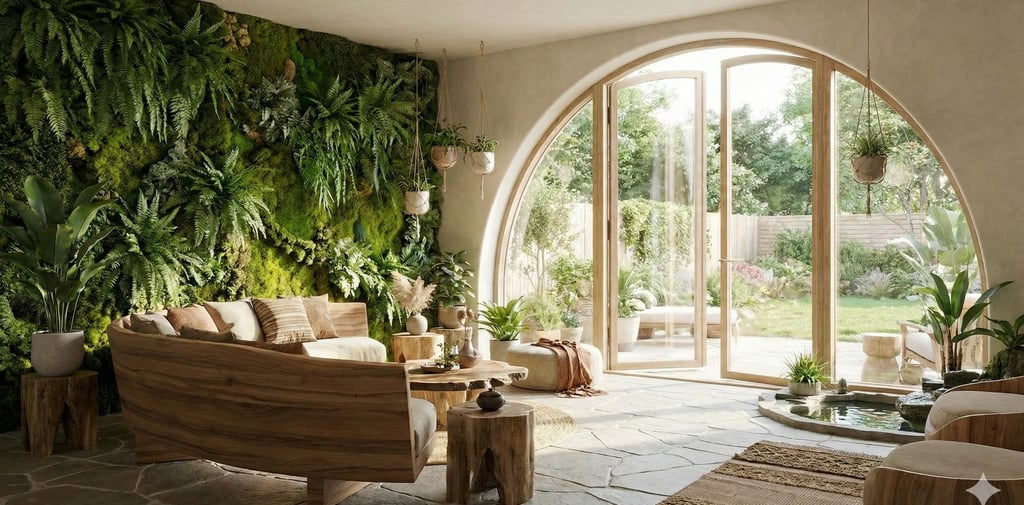
Biophilic design is an approach that connects people with nature through architecture and interior design. It focuses on incorporating natural elements such as plants, daylight, water, textures, and earthy materials to enhance well-being, productivity, and emotional comfort.
1. Let Natural Light Lead the Way
Maximizing natural light instantly transforms a space. Large windows, glass partitions, skylights, and light-reflective surfaces allow sunlight to flow freely, reducing the need for artificial lighting while improving mood and energy levels. Soft, sheer curtains help maintain privacy without blocking daylight.
2. Introduce Indoor Plants Strategically
Plants are the heart of biophilic design. From statement floor plants like fiddle leaf figs and areca palms to compact desk plants and hanging planters, greenery adds life and freshness to interiors. Vertical gardens and living walls are excellent options for creating a bold visual impact in compact spaces.
3. Use Natural Materials and Textures
Incorporating materials such as wood, stone, bamboo, cork, and clay helps establish a grounded, organic feel. Wooden furniture, stone countertops, jute rugs, and linen fabrics bring warmth and authenticity while maintaining a timeless aesthetic.
4. Blur Indoor–Outdoor Boundaries
Seamless transitions between indoor and outdoor spaces enhance the biophilic experience. Balconies, terraces, patios, and sliding glass doors create continuity with nature. Adding outdoor seating, planters, or natural flooring extends living spaces and encourages relaxation.
5. Embrace Nature-Inspired Colors
Earthy tones like greens, browns, sand, and soft blues evoke a sense of calm and balance. These colors work beautifully on walls, furnishings, and décor accents, creating harmony with natural elements throughout the space.
6. Incorporate Water Elements
Water has a calming psychological effect. Small indoor fountains, tabletop water features, or aquariums can add a soothing sensory layer through gentle movement and sound, making spaces feel more tranquil and immersive.
7. Focus on Views and Visual Connections
Designing spaces that frame views of greenery, gardens, or the sky helps maintain a visual connection with nature. Even artwork, wallpapers, or murals inspired by natural landscapes can enhance this effect when outdoor views are limited.
8. Improve Air Quality Naturally
Biophilic design isn’t just visual—it’s functional. Plants like snake plants, peace lilies, and spider plants help purify indoor air, improving overall health and comfort while reinforcing a natural living environment.
Why Biophilic Design Matters
Spaces designed with nature in mind promote reduced stress, improved focus, enhanced creativity, and better overall well-being. Whether in homes, offices, or commercial spaces, biophilic design creates environments that feel alive, welcoming, and deeply human.
Final Thoughts
Bringing the outside in doesn’t require a complete redesign. Small, thoughtful changes—adding plants, maximizing daylight, choosing natural textures—can make a powerful difference. Biophilic design reminds us that nature is not separate from our lives; it belongs within the spaces we live and work in every day.
Follow Us
Crafting interiors that reflect your unique lifestyle.
Contact
+971-5446-17571
©2026 Ivory&Stone Studio- All rights reserved