
How to Add Antique or Local Craft Pieces without Looking Retro‐Tacky
Antique and locally crafted pieces bring soul, history, and authenticity into a space. But without thoughtful styling, they can easily tip a modern interior into something that feels dated or cluttered. The secret lies in balance, intention, and context. Here’s how to incorporate antique or local craft elements into your home without sacrificing a clean, contemporary aesthetic.
1/2/20262 min read
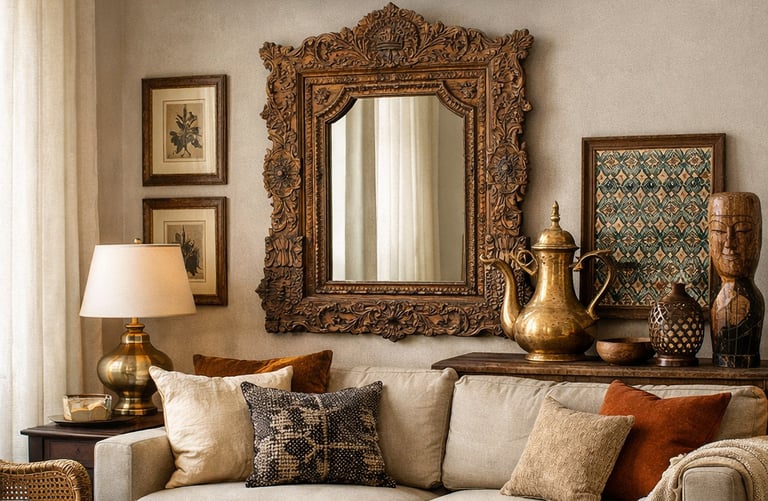
1. Choose Statement Pieces, Not Collections
One of the most common mistakes is overcrowding a space with too many traditional elements.
❌ What goes wrong
Multiple antique items competing for attention
Visual clutter that overwhelms modern interiors
✅ What works
Select one or two standout pieces per room
Let each piece breathe and command attention
A single carved wooden console, an antique mirror, or a handcrafted rug can elevate a space far more than several small, unrelated items.
2. Pair Old with New for Contrast
Contrast is what keeps antique pieces feeling fresh rather than nostalgic.
Design rule: Antique + contemporary = timeless
Smart pairings:
Vintage wooden chest with a sleek sofa
Handcrafted brass lamp on a minimalist side table
Traditional artwork against a neutral, modern wall
The sharper the contrast, the more intentional and curated the space feels.
3. Stick to a Neutral, Modern Base
Antique and craft pieces stand out best against a clean, neutral backdrop.
Best background choices:
White, beige, greige, or muted earth tones
Polished concrete, microcement, or smooth plaster walls
Simple flooring like marble, wood, or large-format tiles
This prevents the space from feeling busy and allows heritage pieces to shine as focal points.
4. Reimagine Traditional Items with New Functions
Using antique or craft pieces in unexpected ways instantly modernizes them.
Examples:
Old wooden trunk as a coffee table
Vintage door panel as wall art
Handcrafted textile framed like a contemporary artwork
When the function feels modern, the form feels intentional—not old-fashioned.
5. Avoid Overly Ornate Matching Sets
Matching traditional furniture sets can make interiors feel like a museum or heritage hotel.
Instead:
Mix handcrafted pieces with simple, modern furniture
Avoid matching carvings, finishes, or patterns across the room
Let each piece tell its own story
This layered approach feels collected over time, not staged.
6. Edit Colors and Materials Carefully
Color plays a major role in whether a piece feels elegant or outdated.
Tips:
Limit bold traditional colors to small accents
Prefer natural materials: wood, clay, stone, metal
Avoid excessive gold, dark reds, or heavy patterns unless balanced with modern elements
Subtle palettes keep the look refined and current.
7. Use Thoughtful Lighting to Elevate Craft Pieces
Lighting can instantly transform how antique items are perceived.
Lighting ideas:
Accent lighting for sculptures or carvings
Warm spotlights on textured walls
Soft ambient lighting instead of harsh overhead lights
Good lighting highlights craftsmanship and detail, making pieces feel curated rather than cluttered.
8. Let Craft Tell a Story — But Keep It Minimal
Antique and local craft pieces carry cultural and emotional value. Let them speak, but don’t over-explain visually.
Best practice:
Fewer pieces, stronger impact
Clear visual hierarchy in the room
Purposeful placement rather than filling empty corners
When every piece has a reason to exist, the space feels sophisticated.
Final Thoughts
Adding antique or local craft pieces isn’t about recreating the past—it’s about honoring it within a modern lifestyle. With the right balance of contrast, restraint, and thoughtful styling, these pieces can bring warmth, depth, and individuality to contemporary interiors—without ever looking retro-tacky.
Follow Us
Crafting interiors that reflect your unique lifestyle.
Contact
+971-5446-17571
©2026 Ivory&Stone Studio- All rights reserved