
How to Blend Smart Home Tech Invisibly Without Losing Interior Aesthetic
Smart homes are no longer about flashy gadgets and visible control panels. Today’s homeowners want technology that works silently in the background—enhancing comfort, efficiency, and security without disrupting the beauty of interior design. The challenge lies in integrating smart home technology seamlessly, so your space feels elegant, not over-engineered. In this blog, we explore how to blend smart home tech invisibly while preserving interior aesthetics, using thoughtful design strategies that balance innovation with timeless style.
12/17/20253 min read
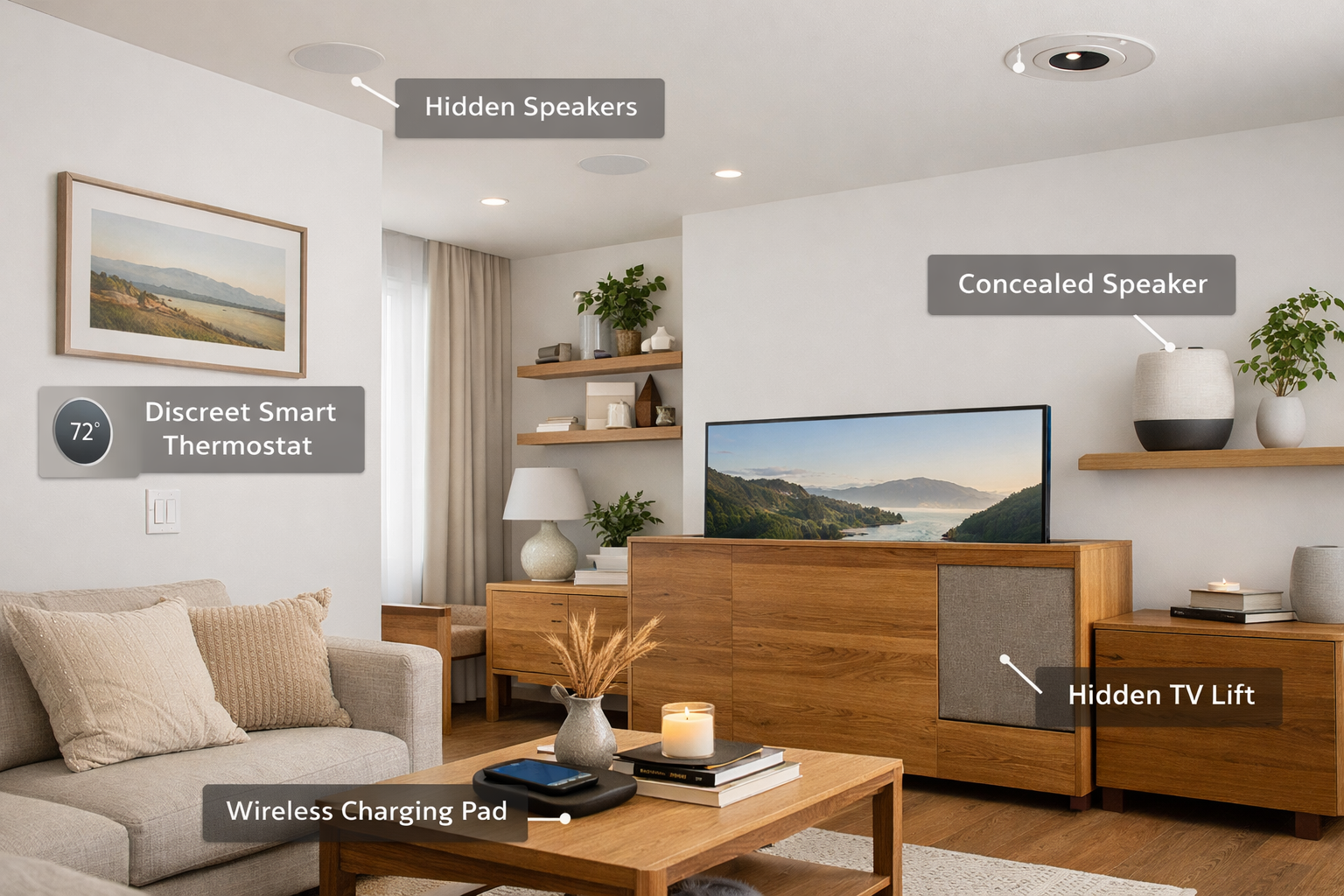
Why Invisible Smart Technology Matters in Interior Design
Modern interior design prioritizes clean lines, visual calm, and intentional detailing. Exposed wires, bulky devices, or mismatched panels can instantly break the harmony of a well-designed space.
Invisible smart home integration ensures that technology supports the lifestyle without dominating the design. When done right, smart features feel intuitive—lighting adjusts naturally, temperatures respond automatically, and entertainment systems disappear when not in use.
1. Start with Design-Led Technology Planning
One of the biggest mistakes homeowners make is installing smart technology after the interiors are complete. This often leads to surface-mounted devices, exposed wiring, and visual clutter.
Solution:
Technology planning should begin at the layout and design stage. Interior designers and automation specialists must collaborate early to decide:
Control points
Wiring routes
Hidden device placement
Equipment housing
This approach allows smart systems to be built into walls, ceilings, and furniture, keeping everything discreet and intentional.
SEO Keywords used: smart home integration, interior design planning, invisible smart technology
2. Conceal Devices Within Architectural Elements
Smart home devices don’t need to be seen to be effective. With custom detailing, technology can be hidden within architectural features.
Examples include:
Sensors concealed in ceiling coves
Speakers integrated into false ceilings or wall panels
Motion sensors embedded into lighting tracks
Smart switches designed flush with wall finishes
When devices blend into materials like wood, stone, or textured finishes, they become virtually invisible.
Tip: Choose finishes that match the surrounding surfaces to maintain visual continuity.
SEO Keywords used: smart home interior design, concealed technology, modern interior solutions
3. Choose Minimal, Design-Friendly Switches and Panels
Traditional smart switches often look bulky and disrupt refined interiors. Modern smart systems now offer sleek, minimal panels that align with contemporary aesthetics.
Look for:
Touch panels with neutral finishes
Matte or stone-textured switches
Flush-mounted controls
App-based controls to reduce physical panels
Fewer switches, thoughtfully placed, result in cleaner walls and a more luxurious look.
SEO Keywords used: smart switches interior design, minimalist smart home, modern interiors
4. Hide Entertainment Systems Creatively
Televisions, sound systems, and media equipment can easily dominate a room if not handled carefully.
Design-forward solutions include:
TVs concealed behind sliding panels or artwork
Motorized TV lifts integrated into cabinetry
Speakers hidden behind acoustic fabric panels
Media units designed as furniture pieces
This allows living rooms and bedrooms to feel serene when technology is not in use—especially important in luxury homes and bedrooms.
SEO Keywords used: hidden TV design, smart entertainment interiors, luxury home automation
5. Use Smart Lighting as an Invisible Design Tool
Lighting is one of the most powerful ways to integrate smart technology invisibly. Instead of visible fixtures everywhere, smart lighting focuses on layered illumination.
Effective strategies include:
Cove lighting with automated dimming
Recessed spotlights with scene controls
Under-cabinet and toe-kick lighting
Motion-activated night lighting
With smart lighting scenes, a single command can transform mood—from bright and functional to warm and ambient—without adding visual clutter.
SEO Keywords used: smart lighting design, ambient lighting interiors, lighting automation
6. Disguise Climate Control Systems
Air conditioning units, thermostats, and vents are often unavoidable—but they don’t need to be visually dominant.
Design solutions include:
Linear AC diffusers aligned with ceiling design
Thermostats placed discreetly or replaced with app controls
Custom grilles that blend into wall finishes
By integrating climate control into the architectural language of the space, comfort becomes seamless and invisible.
SEO Keywords used: smart climate control, HVAC interior design, modern home comfort
7. Prioritize Wireless and Centralized Systems
Excess wiring is the enemy of clean interiors. Modern smart homes benefit from wireless systems and centralized hubs that reduce clutter and maintenance issues.
Benefits include:
Fewer visible cables
Cleaner wall finishes
Easier upgrades in the future
Better long-term aesthetics
A centralized automation system allows all functions—lighting, climate, security, and entertainment—to be controlled discreetly.
SEO Keywords used: wireless smart home, centralized automation, modern smart interiors.
Final Thoughts
Blending smart home technology invisibly is not about hiding innovation—it’s about elevating design through thoughtful integration. When technology works quietly behind the scenes, interiors feel calm, refined, and effortlessly luxurious.At Ivory & Stone Studio, smart technology is never an afterthought. It’s woven into the design process from the very beginning—ensuring every space is functional, future-ready, and visually timeless. If you’re planning a smart home that values both innovation and aesthetics, professional interior planning makes all the difference.
Follow Us
Crafting interiors that reflect your unique lifestyle.
Contact
+971-5446-17571
©2026 Ivory&Stone Studio- All rights reserved