
Interactive & Adaptive Interiors: When Your Home Changes With You
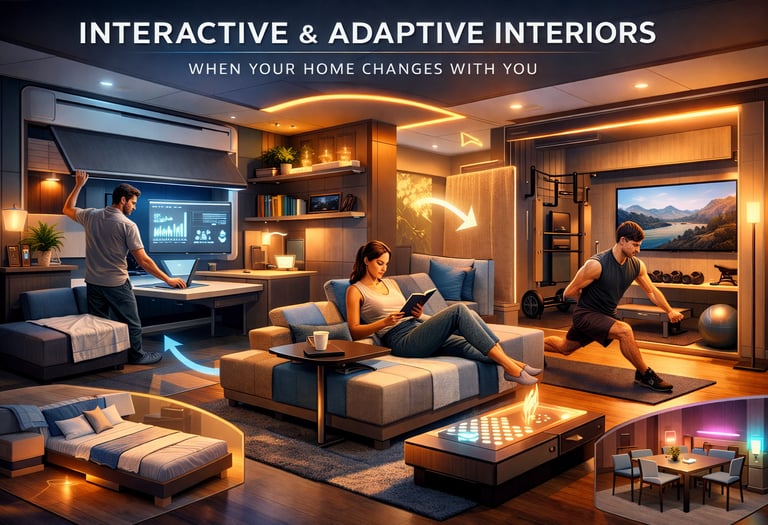
Designing Spaces That Respond, Learn & Evolve Homes are no longer static structures. In 2026, interior design has entered a new era one where spaces respond to your habits, adjust to your moods, and evolve with your lifestyle. Welcome to the world of Interactive & Adaptive Interiors, where technology, design, and human experience seamlessly merge. From smart lighting that senses your energy levels to furniture that reshapes itself for work or relaxation, adaptive interiors are redefining what it means to live comfortably.
2/2/20262 min read
🌐 What Are Interactive & Adaptive Interiors?
Interactive interiors use smart systems, responsive materials, and intelligent layouts to adapt in real time to the people who live in them. These homes don’t just look good—they listen, learn, and react.
Adaptive interiors are designed to:
Change layouts based on use
Adjust lighting, temperature, and sound automatically
Integrate technology invisibly into design
Support wellness, productivity, and sustainability
🔄 Key Elements of Adaptive Interior Design
💡 1. Intelligent Lighting Systems
Lighting now adapts to:
Time of day
Natural light levels
Human circadian rhythms
Smart LEDs adjust warmth and brightness to boost focus during the day and promote relaxation at night—improving sleep and mental well-being.
Trend highlight: Motion-activated, voice-controlled, and AI-driven lighting scenes.
🛋️ 2. Flexible & Transformable Furniture
Modern homes demand versatility. Adaptive furniture includes:
Fold-away desks for hybrid work
Modular sofas that change shape
Expandable dining tables for social gatherings
These designs maximize space without compromising style—perfect for urban living and luxury apartments.
🌡️ 3. Smart Climate Control
Adaptive interiors maintain comfort automatically by learning:
Your temperature preferences
Seasonal climate patterns
Room occupancy
Smart HVAC and underfloor systems reduce energy use while keeping interiors perfectly balanced.
🎛️ 4. Touch-Free & Voice-Activated Controls
From opening curtains to adjusting sound systems, homes are becoming gesture- and voice-responsive, enhancing accessibility and luxury.
This is especially valuable for:
Elder-friendly homes
Universal design
High-end smart residences
🧠 5. AI-Powered Personalization
Artificial intelligence allows interiors to:
Learn daily routines
Predict needs
Offer personalized settings
Imagine walking into your home after a long day, and the lights dim, music starts, temperature adjusts, and seating rearranges—automatically.
🌿 Sustainability Meets Smart Living
Adaptive interiors also support eco-conscious living by:
Reducing energy waste
Using smart water management systems
Incorporating responsive shading and ventilation
Sustainable materials paired with intelligent systems ensure homes are not only future-ready but planet-friendly.
🧘 Adaptive Design for Wellness & Mental Health
Interactive interiors actively support wellness by:
Improving air quality with smart filtration
Reducing noise pollution using adaptive acoustics
Creating calming environments through biophilic design
Homes become sanctuaries that nurture both physical and emotional health.
🏙️ Why Adaptive Interiors Are the Future of Modern Homes
In a fast-changing world, static homes no longer serve modern lifestyles. Adaptive interiors:
Support work-from-home culture
Adjust to family growth and aging
Enhance property value
Offer a personalized luxury experience
They transform houses into living ecosystems that grow with their occupants.
✨ Final Thoughts
Interactive & adaptive interiors represent the next chapter in interior design—where homes are no longer passive spaces but active partners in daily life. As technology becomes more intuitive and design more human-centric, the homes of the future will not just shelter us—they will understand us. If modern luxury is about comfort, efficiency, and personalization, then adaptive interiors are not a trend—they are the standard.
Follow Us
Crafting interiors that reflect your unique lifestyle.
Contact
+971-5446-17571
©2026 Ivory&Stone Studio- All rights reserved