
Multifunctional Spaces in Small Homes: Design Hacks You Won’t Believe Work
Small homes demand big thinking. With rising urban density and compact living becoming the norm, especially in modern cities, multifunctional design is no longer a luxury — it’s a necessity. The good news? With the right design hacks, even the smallest spaces can feel spacious, stylish, and incredibly functional. Here are smart, proven design strategies that truly work and might surprise you.
1/12/20262 min read
Multifunctional Spaces in Small Homes: Design Hacks You Won’t Believe Work
Small homes demand big thinking. With rising urban density and compact living becoming the norm, especially in modern cities, multifunctional design is no longer a luxury it’s a necessity. The good news? With the right design hacks, even the smallest spaces can feel spacious, stylish, and incredibly functional.
Here are smart, proven design strategies that truly work — and might surprise you.
1. Furniture That Does Double (or Triple) Duty
One of the most effective ways to maximize space is by choosing furniture that serves more than one purpose.
Sofa beds and daybeds transform living rooms into guest rooms instantly.
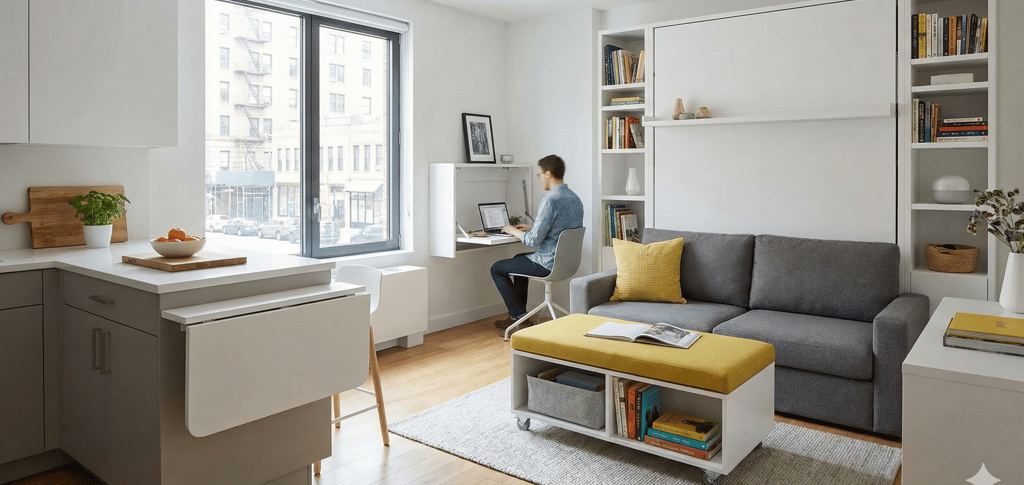
Storage ottomans function as seating, footrests, and hidden storage.
Extendable dining tables stay compact daily but expand when guests arrive.
The key is selecting pieces with clean lines so the room doesn’t feel cluttered.
2. Vertical Space Is Your Best Friend
When floor space is limited, look up.
Install floor-to-ceiling shelving to store books, décor, or daily essentials.
Use wall-mounted desks or fold-down tables for work-from-home setups.
Add tall wardrobes instead of wide ones to free up movement space.
Vertical design draws the eye upward, making rooms feel taller and more open.
3. Smart Zoning Without Walls
You don’t need walls to define spaces.
Area rugs visually separate living, dining, and sleeping zones.
Lighting layers (pendant lights, floor lamps, task lighting) help define each function.
Furniture placement — like a sofa acting as a divider — creates natural boundaries.
This keeps the layout flexible while maintaining flow.
4. Hidden Storage Everywhere
Some of the best storage solutions are the ones you barely notice.
Beds with built-in drawers or lift-up storage
Bench seating with storage inside
Staircase drawers or under-sofa storage
When storage is integrated seamlessly, your home stays organized without looking over-designed.
5. Sliding, Folding & Pocket Doors
Traditional swing doors eat up valuable space.
Sliding doors are ideal for bedrooms, kitchens, or wardrobes.
Pocket doors disappear into the wall entirely.
Folding partitions allow rooms to open up or close off as needed.
These solutions instantly improve circulation in small homes.
6. Mirrors That Multiply Space
Mirrors are one of the oldest tricks — and they still work brilliantly.
Large mirrors reflect light and visually double the room.
Mirrored wardrobe panels add depth without extra décor.
Position mirrors opposite windows for maximum brightness.
Used correctly, mirrors can completely transform compact interiors.
7. Neutral Base, Flexible Accents
A neutral color palette makes small spaces feel calm and cohesive.
Whites, beiges, and soft greys create openness.
Add personality through movable accents like cushions, throws, and art.
This allows you to refresh the space without redesigning it.
Flexibility is the essence of multifunctional living.
8. Custom Built-Ins for Perfect Fit
Off-the-shelf furniture doesn’t always work in small homes.
Custom wardrobes, wall units, or window seating ensure zero wasted space.
Built-ins blend into the architecture, creating a clean, seamless look.
Though an investment, they deliver long-term functionality and visual harmony.
Final Thoughts
Multifunctional spaces aren’t about sacrificing comfort — they’re about designing smarter. With thoughtful planning, clever furniture choices, and strategic layouts, small homes can feel just as luxurious and efficient as larger ones. The secret lies in design that adapts to your life, not the other way around. When every square foot works harder, your home works better for you.
Follow Us
Crafting interiors that reflect your unique lifestyle.
Contact
+971-5446-17571
©2026 Ivory&Stone Studio- All rights reserved