
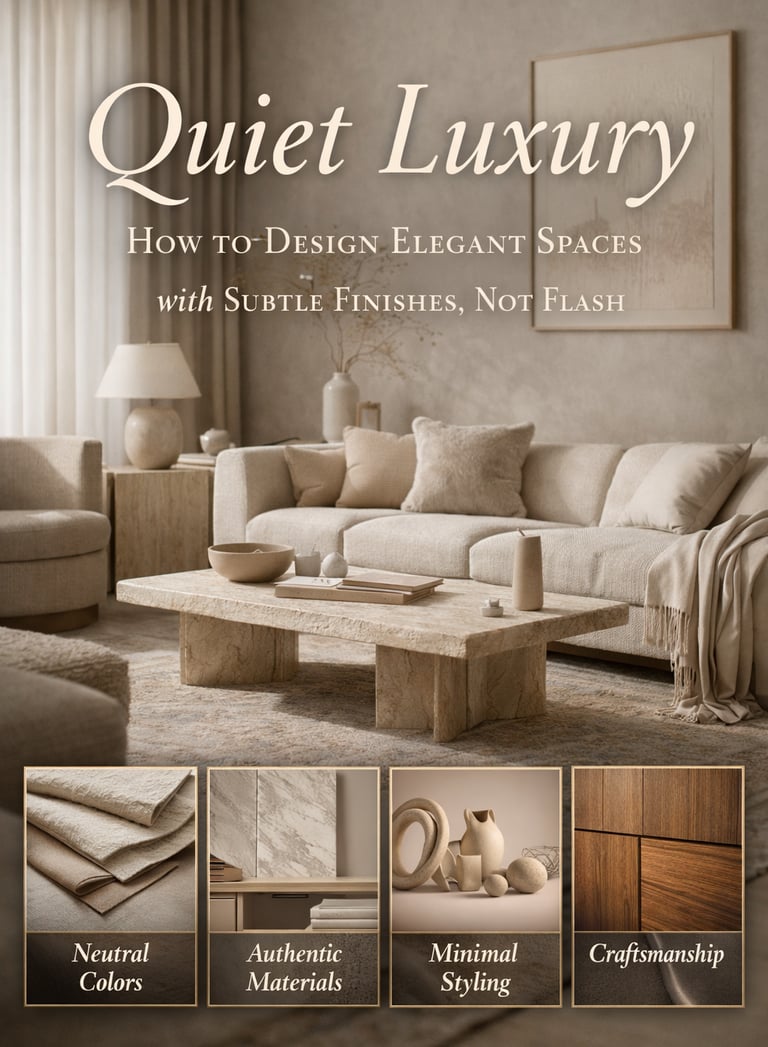
Quiet Luxury: How to Design Elegant Spaces with Subtle Finishes, Not Flash
In a world saturated with bold statements and visual excess, quiet luxury has emerged as the ultimate expression of sophistication. It’s not about logos, glitter, or grand gestures—it’s about restraint, craftsmanship, and timeless design choices that whisper elegance rather than shout it. Quiet luxury interiors feel effortless, calm, and deeply considered. Here’s how to design elegant spaces using subtle finishes that stand the test of time.
1/26/20262 min read
What Is Quiet Luxury in Interior Design?
Quiet luxury focuses on:
Understated elegance
High-quality materials
Neutral, calming palettes
Craftsmanship over trends
Rather than demanding attention, these spaces invite appreciation through texture, proportion, and detail.
1. Choose a Soft, Neutral Color Palette
Quiet luxury starts with colors that soothe the senses.
Best color choices include:
Warm whites, ivory, and cream
Soft taupe, greige, and sand
Muted stone grey and clay tones
Avoid harsh contrasts. Instead, layer similar shades to create depth without drama.
2. Let Materials Speak for Themselves
Luxury lies in the authenticity of materials—not ornamentation.
Go for:
Natural stone (marble, travertine, limestone)
Solid wood with matte or satin finishes
Linen, wool, silk, and cotton upholstery
Handwoven carpets and rugs
Visible grain, natural veining, and tactile textures add richness without flash.
3. Prioritize Craftsmanship Over Quantity
Quiet luxury spaces are intentionally uncluttered.
Design principle: Fewer pieces, better quality.
Invest in bespoke or well-crafted furniture
Avoid mass-produced décor
Choose timeless silhouettes over trendy shapes
Every item should feel purposeful and refined.
4. Embrace Texture, Not Shine
Instead of glossy surfaces, use texture to add visual interest.
Subtle finishes that elevate spaces:
Brushed metals instead of polished chrome
Matte stone and plaster walls
Soft boucle, wool, and linen fabrics
Hand-finished wood and leather
These finishes age beautifully and feel luxurious to the touch.
5. Master the Art of Minimal Styling
Quiet luxury doesn’t mean empty—it means intentional.
Styling tips:
Limit accessories to a few meaningful pieces
Use sculptural objects, ceramics, or art
Avoid over-layering cushions or décor
Negative space is a design element in itself.
6. Focus on Lighting That Feels Natural
Lighting should enhance the mood, not dominate it.
Ideal lighting choices:
Warm, ambient lighting (2700K–3000K)
Concealed LED strips
Soft wall sconces and floor lamps
Minimalist fixtures with refined detailing
Layer lighting to create depth and softness throughout the day.
7. Subtle Luxury Is in the Details
The smallest details define quiet luxury.
Look for:
Seamless joinery
Hidden storage
Flush handles and concealed hardware
Tailored drapery that touches the floor
These details may go unnoticed at first—but they’re what make a space feel truly elevated.
8. Design for Longevity, Not Trends
Quiet luxury is inherently timeless.
Avoid:
Overly bold patterns
Statement pieces that date quickly
Excessive branding or logos
Instead, design spaces that will feel just as elegant a decade from now.
Final Thoughts
Quiet luxury is confidence without noise. It’s about creating interiors that feel calm, composed, and deeply refined—spaces that don’t need to prove their worth. By choosing subtle finishes, honest materials, and thoughtful design, you create elegance that endures far beyond fleeting trends.
Follow Us
Crafting interiors that reflect your unique lifestyle.
Contact
+971-5446-17571
©2026 Ivory&Stone Studio- All rights reserved