
Sustainable Interiors: Not Just Green Looks Materials & Choices That Matter
Sustainability in interior design goes far beyond adding a few plants or choosing earthy colors. True sustainable interiors focus on responsible material selection, long-term durability, healthy living environments, and mindful design decisions that reduce environmental impact without compromising on aesthetics or comfort.
1/30/20262 min read
What Are Sustainable Interiors?
Sustainable interiors are designed to:
Minimize environmental impact
Improve indoor air quality
Reduce waste and energy consumption
Promote longevity and adaptability
Rather than focusing only on “green looks,” sustainable design prioritizes how materials are sourced, produced, used, and disposed of.
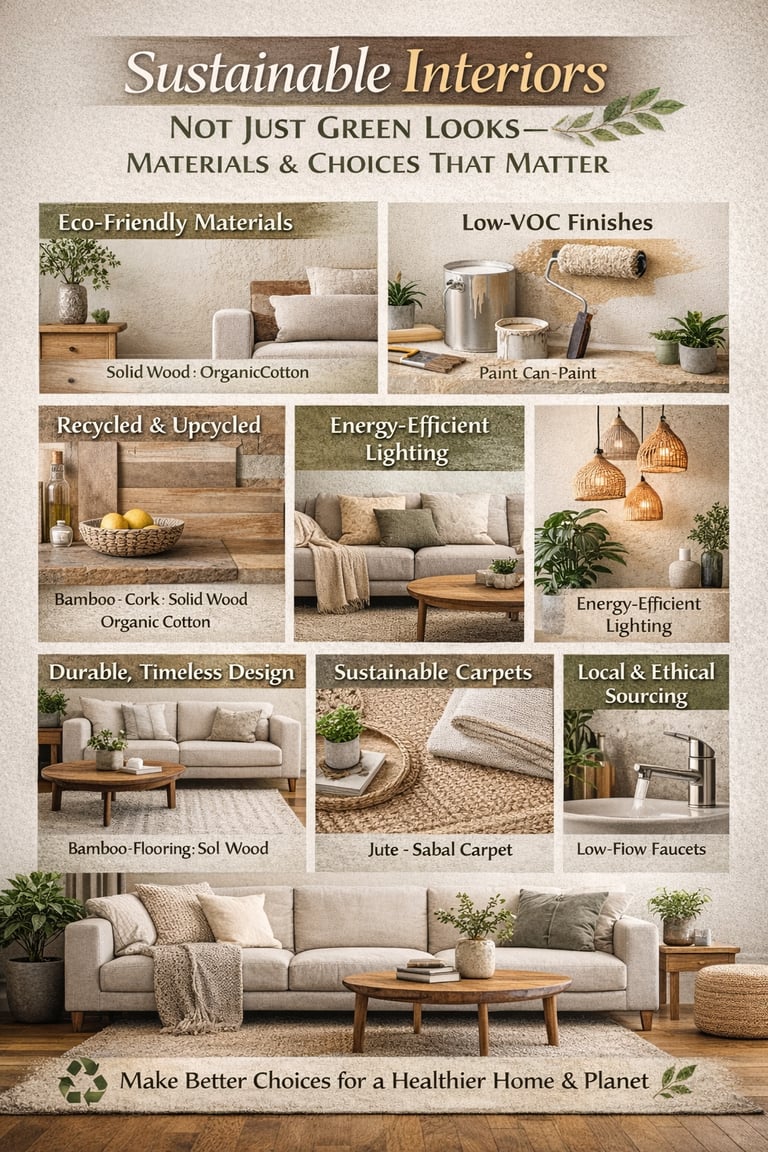
1. Choose Eco-Friendly Materials
Natural & Renewable Materials
Opt for materials that are renewable, biodegradable, and responsibly sourced:
Bamboo and cork flooring
Solid wood with FSC certification
Natural stone and clay finishes
Organic cotton, jute, or wool textiles
These materials not only reduce carbon footprint but also bring warmth and authenticity to interiors.
2. Low-VOC & Non-Toxic Finishes
Indoor air quality is a crucial yet often overlooked aspect of sustainable interiors.
Use low-VOC or zero-VOC paints and adhesives
Avoid finishes with harmful chemicals
Choose natural oils and water-based sealants
These choices contribute to healthier living spaces, especially for families and children.
3. Recycled & Upcycled Design Elements
Sustainability thrives on reuse:
Recycled glass countertops
Furniture made from reclaimed wood
Metal fixtures using recycled materials
Upcycled elements add character, reduce landfill waste, and support circular design principles.
4. Durable Design Over Disposable Trends
Fast-changing trends often lead to frequent renovations and unnecessary waste.
Invest in timeless design
Choose high-quality materials with long life cycles
Focus on modular and adaptable furniture
A sustainable interior should look just as relevant years from now.
5. Energy-Efficient Lighting & Fixtures
Reducing energy consumption is a key component of sustainable interiors.
LED lighting with low energy use
Smart lighting and automation
Energy-efficient appliances and fixtures
Natural light should be maximized through thoughtful layouts and reflective surfaces.
6. Sustainable Carpets & Soft Furnishings
Textiles play a major role in interiors—and sustainability.
Wool, sisal, or jute carpets
Recycled fiber rugs
Natural dyes over chemical treatments
Sustainable soft furnishings combine comfort with environmental responsibility.
7. Local & Ethical Sourcing
Locally sourced materials reduce transportation emissions and support regional craftsmanship.
Handcrafted décor from local artisans
Ethically manufactured furniture
Transparent supply chains
These choices add cultural value and authenticity to interiors.
8. Water-Conscious Design Choices
Sustainability isn’t limited to visuals—it includes resource management.
Low-flow faucets and fittings
Water-efficient sanitary ware
Durable plumbing materials
Small changes can result in significant long-term water savings.
Why Sustainable Interiors Matter Today
Lower environmental impact
Healthier indoor environments
Reduced long-term costs
Increased property value
Future-ready homes and commercial spaces
Sustainable interiors are no longer optional—they reflect responsible living and forward-thinking design.
Final Thoughts
Sustainable interiors are about making better choices, not sacrificing style. By selecting the right materials, prioritizing durability, and embracing eco-conscious practices, you create spaces that are beautiful, functional, and kind to the planet. Because true sustainability isn’t just how a space looks—it’s how it lives.
Follow Us
Crafting interiors that reflect your unique lifestyle.
Contact
+971-5446-17571
©2026 Ivory&Stone Studio- All rights reserved