
Texture Talk: Why Walls, Floors & Fabrics with Depth Are Taking Over Interiors
Interior design is no longer just about color palettes and furniture placement. Today’s spaces are defined by texture—the subtle (and sometimes bold) layers of depth that bring rooms to life. From tactile walls to character-rich flooring and richly layered fabrics, texture is becoming the secret ingredient behind modern, high-end interiors.
12/30/20251 min read
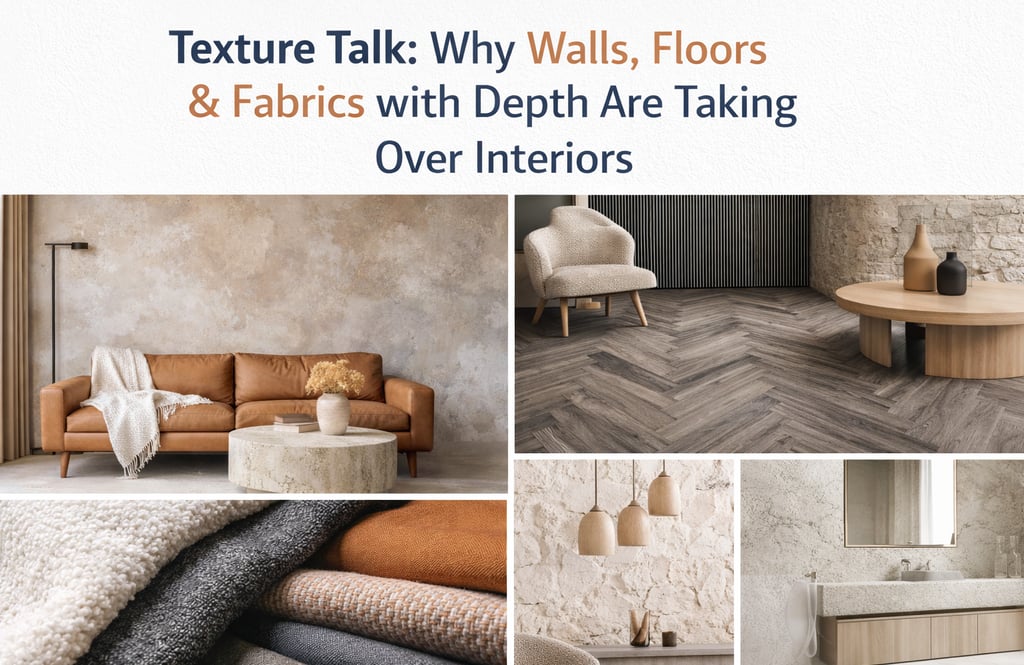
Why Texture Matters More Than Ever
In an era dominated by clean lines and minimal aesthetics, texture adds warmth, personality, and balance. It prevents spaces from feeling flat or sterile, creating environments that feel lived-in, welcoming, and visually engaging—without overwhelming the design.
Textured Walls: Beyond Plain Paint
Walls are no longer just a backdrop. Designers are embracing finishes that add dimension and movement, such as:
Limewash and Venetian plaster
Fluted panels and ribbed wall designs
Natural stone, brick, or concrete textures
These surfaces interact beautifully with light, creating soft shadows and visual depth that changes throughout the day.
Floors That Tell a Story
Flooring has evolved from purely functional to deeply expressive. Popular textured flooring options include:
Wide-plank wood with visible grain
Stone and terrazzo with natural imperfections
Patterned tiles and matte finishes
Textured floors ground a space, adding authenticity and character while enhancing durability and slip resistance.
Fabrics That Invite Touch
Soft furnishings are where texture truly shines. Designers are layering materials such as:
Bouclé, linen, and wool for softness
Velvet and suede for richness
Woven and embroidered textiles for detail
These fabrics add comfort and visual contrast, making interiors feel curated rather than staged.
The Psychology of Texture
Texture doesn’t just look good—it feels good. Tactile surfaces create emotional connections, offering a sense of calm, warmth, and luxury. This is especially important in modern interiors, where neutral tones dominate and texture becomes the main source of interest.
How to Use Texture Without Overdoing It
The key is balance:
Mix rough and smooth surfaces
Pair matte finishes with subtle sheen
Keep a cohesive color palette while varying materials
When used thoughtfully, texture enhances rather than distracts.
Final Thoughts
Texture is redefining contemporary interiors by adding depth, warmth, and personality. Whether through sculpted walls, expressive floors, or layered fabrics, tactile design elements are shaping spaces that feel both modern and timeless. If you want your interiors to feel truly complete, it’s time to think beyond color—and start designing with texture.
Follow Us
Crafting interiors that reflect your unique lifestyle.
Contact
+971-5446-17571
©2026 Ivory&Stone Studio- All rights reserved